What does air consist of?
Air surrounds the Earth at a pressure needed to maintain life processes. A human being uses about 1 m3 of respiratory air per hour. Air is a mixture of gases, impurities and fumes. Dry, clean air only exists in theory. The constituent gases in air are mostly nitrogen (77%), oxygen (22%), argon and other gases (carbon dioxide, hydrogen, neon, helium, krypton) and water vapour (1%).
Moist air
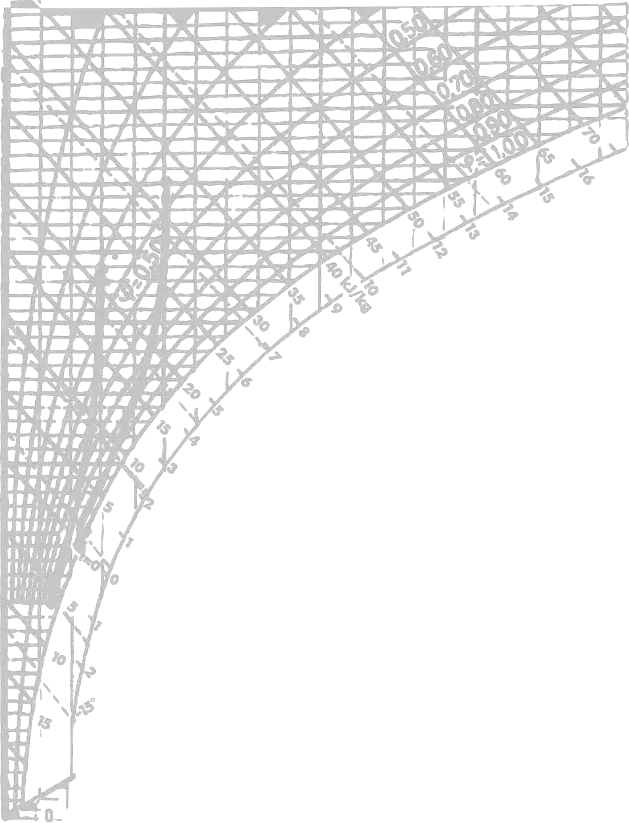
There is always some water vapour in the air. Moist air is a mixture of dry air and water vapour. The humidity in the air can be changed to the desired concentration using humidification/dehumidification.
Temperature
The temperature is measured using thermometers and is specified in °C (degrees Celsius) and °F (degrees Fahrenheit) or K (Kelvin).
Absolute humidity – vapour concentration
Absolute humidity refers to the quantity of water in kilograms (kg) per kilogram (kg) of dry air. The capacity of the air to contain water decreases at reduced temperatures.
Relative humidity – relative vapour pressure
This specifies how much moisture the air holds compared to the maximum possible amount of moisture at a given temperature. For example, if the relative humidity is 10%, it means that the water vapour in the air has a pressure (= partial pressure) that is 10% of the water vapour saturation pressure at a given temperature.
Enthalpy
Enthalpy is the heat content of the air, specified in kJ/kg air.